
Peptide Portfolio
CJC-1295/Ipamorelin
BPC-157/TB-500
GHK-Cu
GROWTH & REPAIR, IMMUNE & INFLAMMATORY, HAIR & AESTHETICS

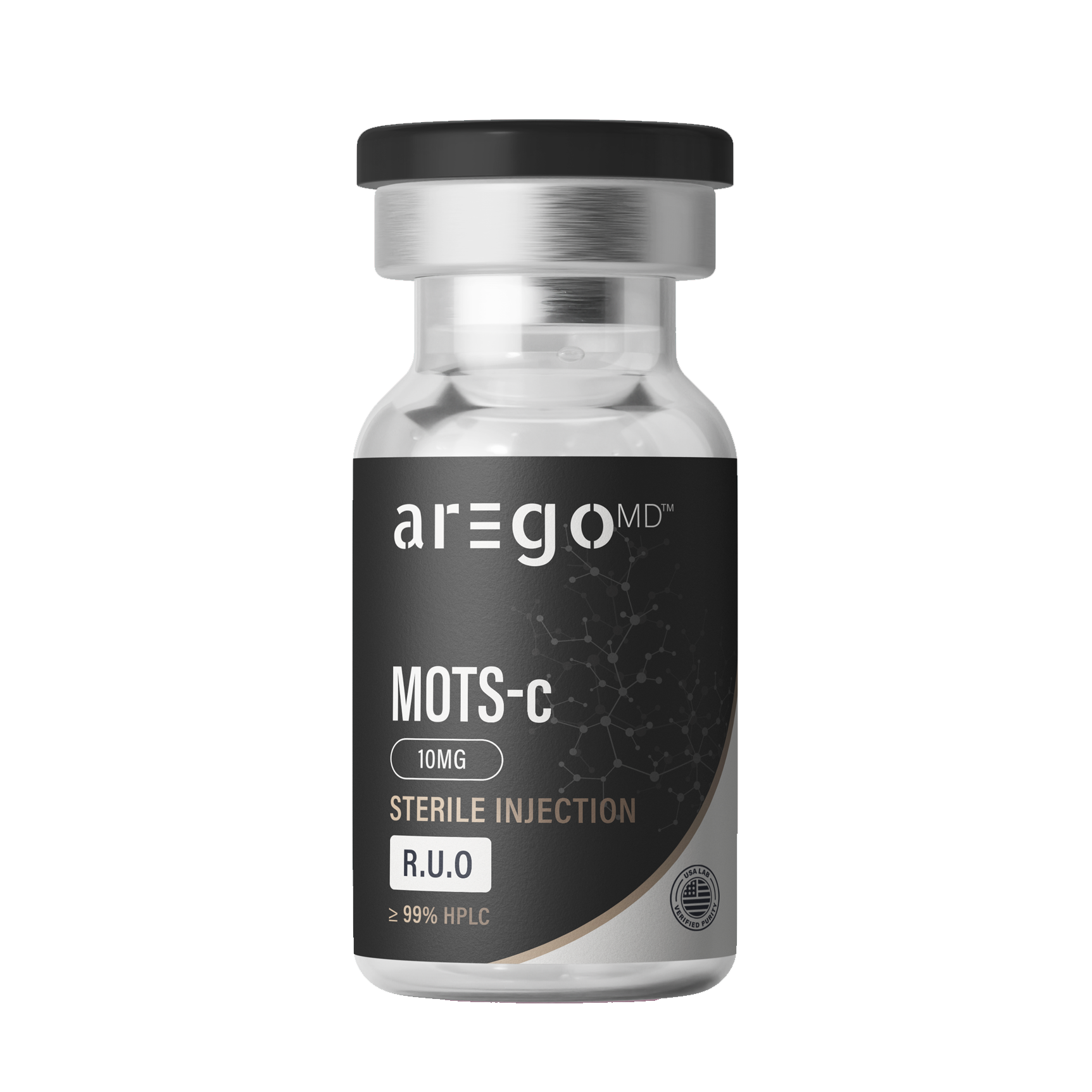
MOTS-C

MOTS-C is a specialized research reagent encoded by the mitochondrial DNA rather than nuclear DNA. In research settings, it is highly valued for its unique ability to act as a systemic signaling molecule that targets skeletal muscle and other metabolic tissues. Unlike traditional hormones, MOTS-C is studied for its direct impact on cellular energetics and its capacity to modulate gene expression related to metabolism. This allows for the investigation of aging-related metabolic decline and exercise-mimetic effects in various mammalian models. Supplied as a stable, lyophilized powder, it is intended strictly for laboratory research and is not for human or veterinary administration.

$189.00 / month

FREE Shipping on orders over $100

MOLECULAR FORMULA:

C101H152N28O22S2

Quantity Discounts Available

attention_blue.png

Product Usage: For Research Use Only

Peptide products offered through this platform are provided for informational and research purposes or are made available only pursuant to evaluation and authorization by a licensed healthcare provider, where applicable. These products are not intended to diagnose, treat, cure, or prevent any disease. Individual results may vary. Use of any peptide product should be conducted under appropriate professional supervision. All content provided is for educational purposes only and should not be considered medical advice. Always consult with a qualified healthcare professional before beginning any new wellness or medical program.

The MOTS-C Peptide

MOTS-C is a specialized research reagent encoded by the mitochondrial DNA rather than nuclear DNA. In research settings, it is highly valued for its unique ability to act as a systemic signaling molecule that targets skeletal muscle and other metabolic tissues. Unlike traditional hormones, MOTS-C is studied for its direct impact on cellular energetics and its capacity to modulate gene expression related to metabolism. This allows for the investigation of aging-related metabolic decline and exercise-mimetic effects in various mammalian models. Supplied as a stable, lyophilized powder, it is intended strictly for laboratory research and is not for human or veterinary administration.

Chemical Info

CAS Number 1627580-64-6  
PubChem CID 146675088  
Molecular Weight 2174.62 g/mol  
Molecular Formula C101H152N28O22S2  
Synonyms Mitochondrial Regulator, Mitochondrial-Derived Peptide, Exercise Mimetic
Purity ≥ 99% HPLC

Storage

Temperature
Store in lyophilized form at -20°C to maintain compound stability.
No Sunlight
Store protected from direct light exposure to reduce degradation.
No Moisture
Keep totally dry and avoid moisture exposure prior to reconstitution.
Vial
Keep vial tightly sealed when not in use to preserve integrity.

The GHRH/GHRP Synergistic Axis


The primary focus of this blend is the investigation of ‘Dual-Receptor Synergism.’ In pituitary research, it has been observed that GHRH and GHRP work through different intracellular pathways (cAMP and PLC/IP3, respectively). When administered together, they have been shown to produce a GH release that is significantly greater than the sum of the two parts. Researchers use this blend to determine the optimal ratios required to maximize this ‘Double Pulse’ while avoiding receptor desensitization.

Metabolic Signaling & Body Composition


In metabolic studies, this complex is utilized to observe the secondary effects of elevated GH on the IGF-1 axis. By stimulating the liver to produce IGF-1 in a pulsatile manner, researchers can monitor changes in nitrogen retention, protein synthesis, and collagen deposition. This research is vital for understanding how specific secretagogue stacks can influence the structural restoration of skeletal muscle and connective tissue in animal models of atrophy or injury.

YOUR CART
  • No products in the cart.

GLP Experience

Help us personalize your experience

Have you used GLP products before?